Gardening Teddington — Recycling and Sustainability
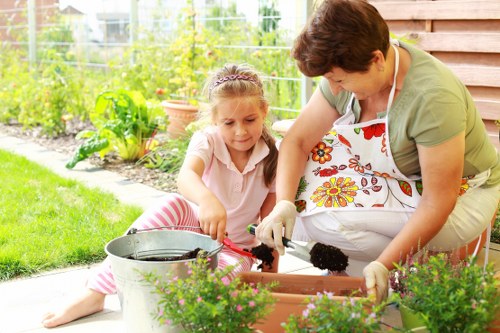 Welcome to Gardening Teddington, where we promote an eco-friendly waste disposal area and build a practical, community-led sustainable rubbish gardening area. Our work supports healthier soils, better plant health and a reduced dependence on landfill. By framing garden waste as a resource — compost, mulch, reclaimed pots and repurposed soil — we help households and community spaces turn what once was rubbish into valuable inputs for new planting and urban greening.
Our recycling percentage target
To make progress measurable, we have set a clear recycling percentage target: a borough-focused goal of 65% recycling by 2028 for household and garden-related materials collected or processed through Gardening Teddington initiatives. That figure is an ambitious but realistic milestone that supports wider Richmond borough aspirations and helps drive investment in local infrastructure. We track progress through tonnage diverted to composting, volumes reused via partner charities and reductions in residual waste, ensuring that our sustainable gardening efforts contribute to broader climate and waste goals. Local infrastructure matters. Nearby transfer stations and green hubs are essential to the circular approach — they provide sorting bays, bulking facilities and access to specialist composting or soil treatment. The borough's approach to waste separation encourages households to separate food, glass, paper, plastics and garden waste at source using kerbside bins and communal points. Typical materials processed or accepted at transfer stations include:
- Garden and woody waste destined for community or municipal composting
- Clean soil and turf for screening and reuse in landscaping projects
- Glass, paper and mixed recyclables processed for re-use
Partnerships with charities and community organisations are central to our model. Gardening Teddington works with local reuse charities, social enterprises and volunteer groups to extend the life of garden items — from donating usable planters and tools to running plant exchanges and tool libraries. These collaborations reduce disposal costs, create social value and make sustainable gardening accessible to residents on lower incomes. Working together also amplifies outreach: charity partners host workshops, arrange redistribution events and help channel materials to where they can be reused rather than shredded or sent to landfill.
Sustainable rubbish gardening area — practical approaches
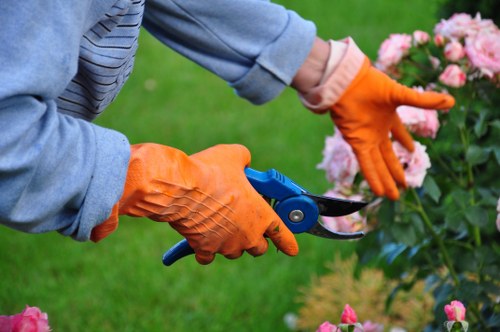
Creating a truly sustainable rubbish gardening area means combining household action, community facilities and proper collection systems. We support home composting, encourage sign-up to green bin schemes, and promote community compost hubs that accept mixed garden waste. Mulching and on-site composting reduce transport needs and lock carbon in soils; shredded prunings can be used for paths and habitat piles, woody waste can be chipped for mulch and leaves make valuable leaf-mould. Small-scale processing keeps materials local and fosters resilience.Collection and logistics are equally important: we prioritise low-carbon vans and energy-efficient vehicles for local runs, and plan routes to combine household garden collections with deliveries to community compost hubs. Where feasible we use electric or hybrid vans for short distances and low-emission vehicles for heavier transport. These choices lower the carbon footprint of managing green waste and make the whole recycling loop more sustainable.
For residents, practical sorting tips help keep the eco-friendly waste disposal area efficient: remove contaminants (plastic liners, food cling wrap) from garden waste, keep soil separated where required, and avoid mixing hazardous materials such as treated wood. Gardening sustainably in Teddington is also about reducing waste upstream — choosing perennial planting, reusing containers and repurposing materials. Many households adopt simple habits like creating a kitchen caddy for food scraps that go into compost, or establishing a corner for leaf-mould collection during autumn.
 We maintain formal agreements with local transfer stations and a network of charitable partners to ensure useful materials are reused. Common partner activities include:
- Redistributing usable pots, raised beds and tools to community gardens
- Running swap days and plant exchanges to keep plants and seedlings circulating locally
- Operating volunteer-run compost hubs that accept household garden waste and turn it into soil improver for community green spaces
 In summary, Gardening Teddington is building a resilient, community-centred approach to an eco-friendly waste disposal area and a practical sustainable rubbish gardening area. By aiming for our recycling percentage target, supporting borough waste separation, partnering with transfer stations and charities, and investing in low-carbon vans and efficient collections, we close the loop on garden waste. Join community compost hubs, support reuse events and adopt simple sorting habits at home — together we can reduce emissions, save resources and grow greener, healthier gardens across Teddington.